

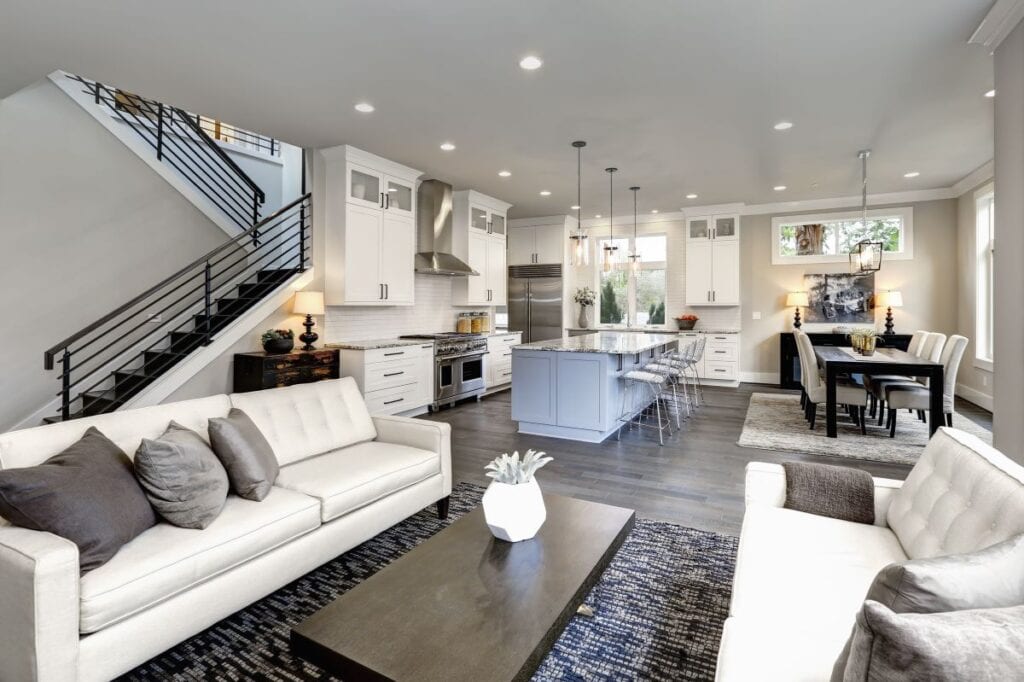
Open-concept living has become a highly popular design trend in recent years, offering a sense of spaciousness and promoting a more interconnected lifestyle. The idea of removing interior walls to create a seamless flow between different areas of a home is certainly appealing, but it’s not without its considerations. In this blog post, we’ll delve into the pros and cons of open-concept living, exploring how it affects spatial flow, privacy, and design continuity.
Pros of Open Concept Living:
1. Enhanced Social Interaction: One of the primary advantages of an open-concept layout is the facilitation of social interaction. With fewer barriers between spaces, it becomes easier for family members and guests to communicate and interact across different areas of the home.
2. Improved Natural Light and Views: Open spaces allow natural light to flow more freely, brightening up the entire living area. Larger windows can be utilized to provide uninterrupted views of the surrounding environment, blurring the line between indoor and outdoor spaces.
3. Flexibility in Furniture Arrangement: Without interior walls dictating room divisions, arranging furniture becomes a more flexible task. This adaptability allows homeowners to create various seating and living configurations to suit different occasions.
4. Feeling of Spaciousness: Open-concept living can make even smaller homes feel more spacious. The absence of walls creates an unbroken visual line, which gives the illusion of a larger area.
5. Entertainment and Hosting: For those who enjoy hosting gatherings and parties, an open layout provides a seamless transition between kitchen, dining, and living spaces. This allows hosts to interact with guests while preparing meals or drinks.
Cons of Open Concept Living:
1. Noise and Lack of Privacy: One significant drawback of open-concept living is the lack of sound isolation. Noise from the kitchen, television, or conversations can easily travel throughout the entire space, compromising privacy and tranquility.
2. Limited Storage Space: Open layouts often result in fewer walls for built-in storage solutions, which can lead to challenges in finding adequate storage for belongings.
3. Cooking Odors and Clutter: In an open-concept kitchen, cooking odors can permeate the entire living area. Additionally, keeping the kitchen clutter-free becomes crucial, as it’s visible from the adjoining spaces.
4. Design Continuity: Creating a cohesive design aesthetic can be challenging in an open-concept space. Maintaining a consistent style and color scheme across different areas can be more complex due to the lack of natural dividers.
5. Heating and Cooling: Maintaining a comfortable temperature in an open space can be tricky. It might require more strategic placement of heating and cooling sources to ensure even distribution throughout the entire area.
6. Loss of Private Spaces: While the interconnectedness of an open layout is appealing, it can lead to a dearth of private spaces. Having separate rooms for focused work, relaxation, or solitude becomes more challenging.
In conclusion, the decision to embrace open-concept living or maintain traditional interior walls depends on individual preferences and lifestyle needs. The allure of spaciousness, improved social interaction, and a contemporary aesthetic draws many homeowners to the open-concept trend. However, it’s crucial to weigh these benefits against the potential drawbacks, such as compromised privacy, noise concerns, and challenges in design continuity. Ultimately, finding the right balance between open spaces and enclosed areas is key to creating a home that suits your unique needs and preferences.